You have probably heard the word “cloud” more times than you can count. Your phone backs up photos to the cloud. Your office uses cloud software. Every tech job posting mentions cloud skills. But if someone asked you right now to explain what cloud computing actually is, would you know what to say?
If not, you are not alone. And that is exactly why this guide exists.
This is a complete beginner’s guide to cloud computing. By the time you finish reading, you will understand what it is, how it works, why the whole world has moved to it, and how you can start building skills in it too. No technical background needed. No jargon. Just plain, simple language.
What Is Cloud Computing?
Cloud computing is the delivery of computing services like storage, servers, databases, networking, software, and analytics over the internet instead of using your own physical hardware.
Think of it this way. Earlier, if a company needed to store data or run software, it had to buy physical servers, set them up in a room, maintain them, and pay huge electricity bills. That was exhausting, expensive, and honestly a bit wasteful.
Cloud computing changed all of that. Now, instead of owning the infrastructure, companies simply rent computing power and storage from a cloud provider like Amazon, Microsoft, or Google. They use what they need, pay only for what they use, and scale up or down anytime they want.
It is a bit like how you use electricity at home. You do not own a power plant. You just plug in, use what you need, and pay the bill at the end of the month.
Why Cloud Computing Is a Big Deal Right Now
Cloud computing is not just growing, it is exploding. The global cloud market is expected to cross $1.6 trillion by 2030, and India alone is seeing massive adoption across every industry from banking and healthcare to retail and education.
According to NASSCOM, cloud computing is expected to contribute around 8% of India’s GDP by 2026, which is four times what it was just five years ago. And this growth is creating nearly 14 million jobs across the cloud ecosystem in India.
If you are a student, a working professional, or someone thinking about a career change, understanding cloud computing is no longer optional. It is one of the most in-demand skills in the job market today.
How Does Cloud Computing Actually Work?
When you save a file to Google Drive or stream a movie on Netflix, that data is not sitting on your laptop. It is stored on massive servers inside data centres located across the world. These data centres belong to cloud providers, and they are connected to you through the internet.
Here is what happens behind the scenes:
You make a request, say, opening a Google Doc. That request travels over the internet to a data centre. The server processes it and sends the response back to your screen. All of this happens in milliseconds.
The magic here is virtualisation. Cloud providers use software to divide one physical server into many virtual machines. This means multiple users can use the same physical hardware without ever interfering with each other. It is efficient, fast, and incredibly scalable.
Types of Cloud Computing You Should Know
There are three main types of cloud computing, and understanding these will make everything else click.
Public Cloud is where the cloud infrastructure is owned and operated by a third-party provider like Amazon Web Services, Microsoft Azure, or Google Cloud. You access it over the internet and share resources with other users. It is cost-effective and ideal for startups and businesses that do not want to manage their own infrastructure.
Private Cloud is where the infrastructure is used exclusively by one organisation. It can be hosted on-premises or managed by a third party. It gives more control and is preferred by industries like banking and healthcare where data privacy is critical.
Hybrid Cloud is a combination of public and private cloud. Companies use a hybrid model when they want to keep sensitive data on a private cloud but run other workloads on the public cloud. Most large enterprises in India today use a hybrid approach.
The Three Service Models: IaaS, PaaS, and SaaS
This is the part where most beginners get confused. But once you understand these three models, you will see the cloud much more clearly.
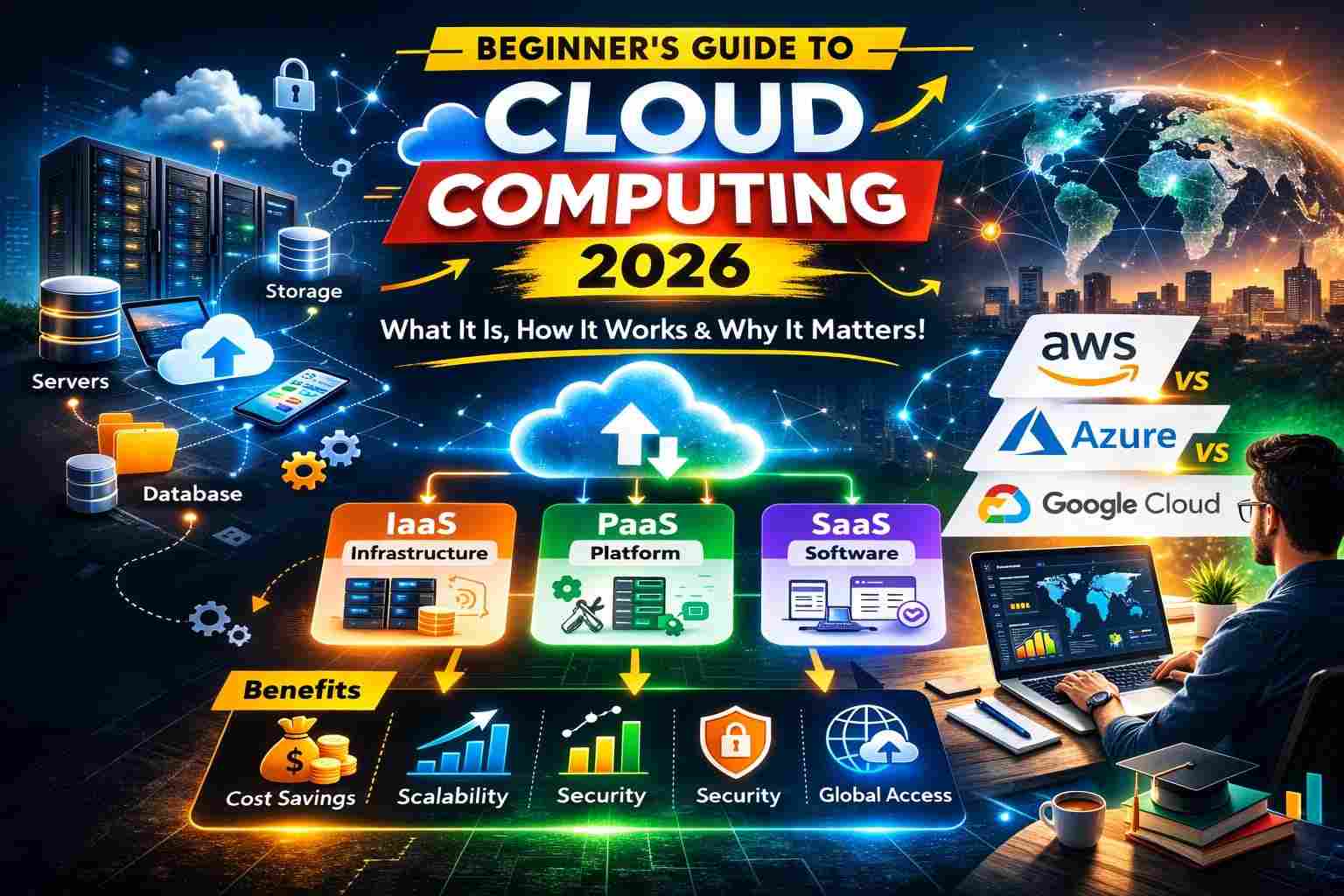
IaaS (Infrastructure as a Service) gives you virtual servers, storage, and networking over the internet. You manage the operating systems and applications yourself. Think of it like renting a plot of land and building your own house. AWS EC2 is a classic example.
PaaS (Platform as a Service) gives you a platform to develop, test, and deploy applications without worrying about the underlying infrastructure. Think of it like moving into a furnished flat where the building, plumbing, and electricity are all set up. You just bring your things. Google App Engine is a good example.
SaaS (Software as a Service) is what most of us use daily without even realising it. Gmail, Zoom, Slack, and Canva are all SaaS products. You just open a browser, log in, and use the software. No installation, no maintenance, nothing.
Key Benefits of Cloud Computing
Cloud computing has become so popular for some very solid reasons. Here are the main ones.
Cost savings are huge. You do not need to invest in expensive hardware upfront. You pay as you go, which means even a small startup can access enterprise-grade technology.
Scalability is effortless. Need more storage or computing power during a sale season? Scale up in minutes. When things slow down, scale back. Traditional infrastructure never gave you this flexibility.
Accessibility is unmatched. You can access your data and applications from anywhere in the world with just an internet connection. Remote work has become possible at scale because of cloud computing.
Security has also improved significantly. Top cloud providers invest billions in securing their infrastructure. They offer encryption, access controls, and compliance certifications that most individual companies could never afford to build on their own.
Reliability and uptime are something cloud providers take very seriously. They have redundant systems and data backed up across multiple locations. Even if one data centre faces an issue, your data stays safe and your applications keep running.
Top Cloud Providers: AWS vs Azure vs Google Cloud
There are three major players dominating the cloud market globally and in India. Understanding the difference between them will help you decide where to focus your learning.
Amazon Web Services (AWS) is the market leader and has been for years. It offers the widest range of services and has the largest community and job demand. If you are just starting out and want the best job opportunities, AWS is a solid first choice. The AWS Cloud Practitioner certification is the most beginner-friendly starting point.
Microsoft Azure is the second largest cloud provider and is especially popular among enterprises that already use Microsoft products like Office 365 or Windows Server. Azure is huge in India’s corporate sector and has strong demand in banking, government, and large IT companies.
Google Cloud Platform (GCP) is strong in data analytics, machine learning, and artificial intelligence. If your interest is in data science or AI-powered applications, GCP is worth exploring.
For absolute beginners, most experts recommend starting with AWS simply because it has the most learning resources, a generous free tier, and the most active community.
Cloud Computing Career Opportunities in India in 2026
If you are wondering whether cloud computing is worth learning, the numbers speak for themselves.
Entry-level cloud roles in India like Cloud Support Engineer or Junior Cloud Administrator typically pay between Rs 3.5 to 7 lakh per annum. As you gain experience and certifications, roles like Cloud Architect, DevOps Engineer, and Cloud Security Specialist can fetch anywhere from Rs 15 to 30 lakh per annum or more.
Some of the most in-demand cloud roles in India right now are Cloud Architect, DevOps Engineer, Site Reliability Engineer, Cloud Security Specialist, Data Engineer, and FinOps Analyst.
The great news is you do not need a computer science degree to start. Many professionals from non-IT backgrounds have successfully transitioned into cloud roles by learning the fundamentals, earning a certification, and building hands-on experience.
How to Get Started with Cloud Computing as a Beginner
Here is a simple roadmap you can follow right now.
Start by understanding the basics. Read articles, watch YouTube videos, and build a clear picture of what cloud computing is and how it works. This guide is already a great first step.
Choose a cloud platform to focus on. For most beginners in India, AWS is the recommended starting point. Create a free AWS account and explore the free tier services.
Work towards a beginner certification. The AWS Cloud Practitioner (CLF-C02), Microsoft Azure Fundamentals (AZ-900), or Google Cloud Digital Leader are all designed for beginners and require no prior cloud experience.
Build hands-on projects. Reading alone will not get you hired. Deploy a simple website, create a storage bucket, set up a virtual machine. Get your hands dirty. Platforms like AWS, Azure, and Google Cloud all offer generous free tiers to practice without spending money.
Join communities. Subreddits like r/aws and r/cloudcomputing, LinkedIn groups, and forums like A Cloud Guru are full of people at the same stage as you. Learning together is faster and more enjoyable.
Common Myths About Cloud Computing
There are a few misconceptions that stop beginners from taking the first step.
Many people think cloud computing requires strong coding skills. It does not, at least not at the beginner level. While knowing Python or Bash scripting helps as you advance, you can start with zero coding knowledge.
Another common myth is that cloud computing is only for big companies. In reality, small businesses and individual developers use cloud services every day. The pay-as-you-go model makes it accessible to everyone.
Some also believe cloud is not secure. This is outdated thinking. Modern cloud providers have some of the most advanced security systems in the world, often far more secure than what most companies could manage on their own.
Frequently Asked Questions
What is cloud computing in simple words?
Cloud computing means using the internet to access computing resources like storage, software, and servers instead of managing your own physical hardware.
Is cloud computing a good career in India in 2026?
Absolutely. Cloud computing is one of the fastest growing fields in India with strong salary growth, high demand, and opportunities across industries.
Which cloud certification is best for beginners?
The AWS Cloud Practitioner or Microsoft Azure AZ-900 are the most beginner-friendly cloud certifications to start with.
Can a non-IT person learn cloud computing?
Yes. Many people from non-technical backgrounds have successfully learned cloud computing by starting with the fundamentals and working towards beginner certifications.
How long does it take to learn cloud computing basics?
Most learners can grasp the fundamentals in 4 to 8 weeks with consistent daily practice of 1 to 2 hours.
Final Thoughts
Cloud computing is no longer a niche technology for big corporations. It is the backbone of the modern internet, and it is shaping how every industry operates, from Zomato’s delivery platform to your hospital’s patient records system.
The best part is that getting started has never been easier or more affordable. Free learning resources, generous cloud free tiers, and globally recognised certifications make it possible for anyone to build real skills from scratch.
Whether you want to build a career in tech, improve your current job skills, or just understand the technology running the world around you, this is the right time to start. The cloud is not going anywhere. In fact, it is only getting bigger.
Found this article helpful? Share it with someone who is just starting their tech journey. And if you have questions about cloud computing, drop them in the comments below.